
Exchanging Homes Between Friends: A Private Network Instead of a Rental Platform
They used to get away three weekends a year, held back by accommodation costs. Since they started sharing their four homes, it happens almost once a month — with no one keeping count.
Julien et Claire, 34 et 32 ans — Lyon
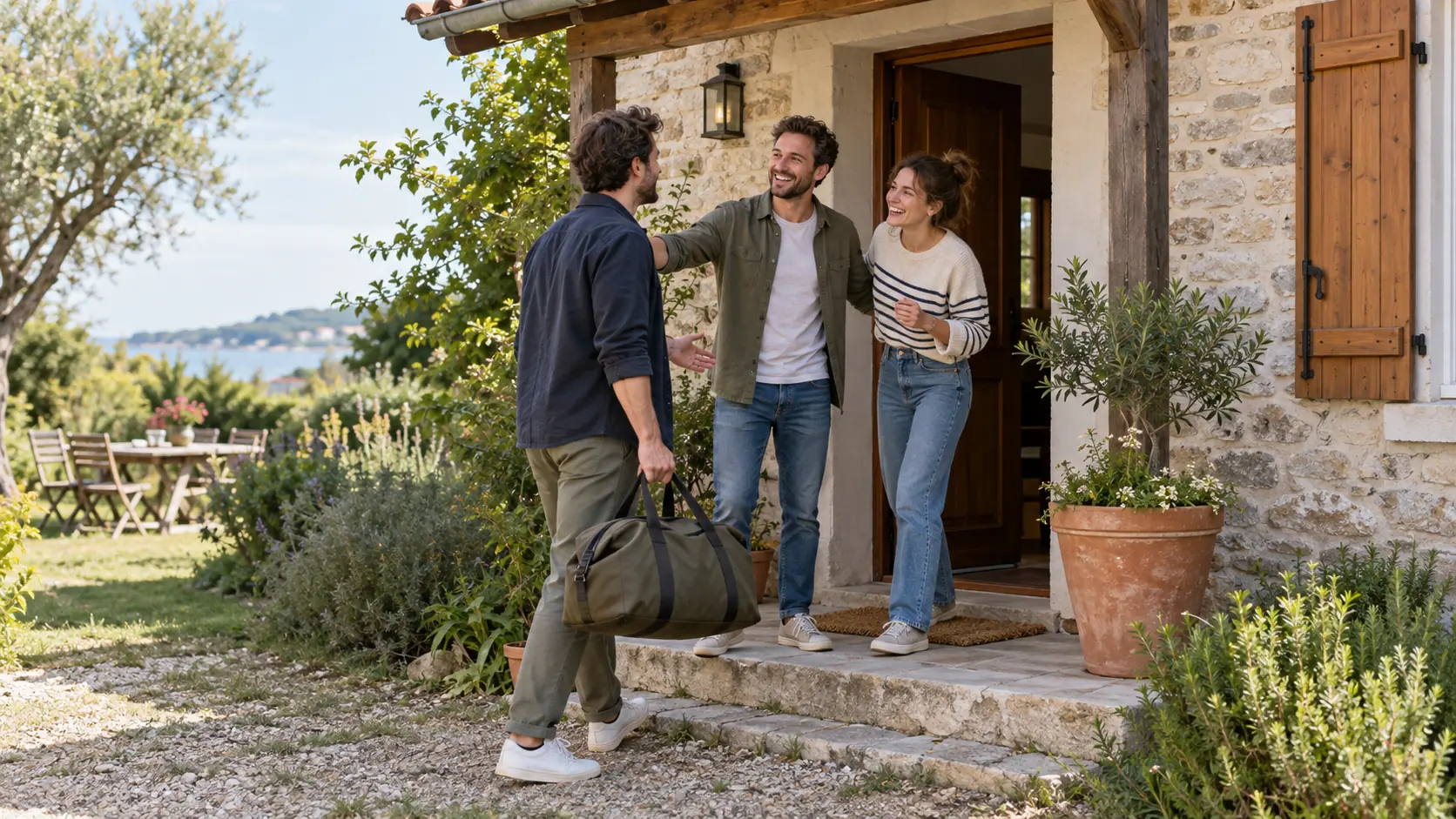
Julien and Claire live in Lyon. Three couples who are close friends each own a home: one in the Ardèche, one in the Jura, one near Arcachon. Julien and Claire have an apartment in Savoie.
What Was Holding Them Back
"We love getting away for the weekend. But between gas, meals, and accommodation, a weekend for two quickly came to three hundred euros. We only went three times a year."
The idea of lending each other their homes had existed for a long time, without ever coming together. "We'd say 'come by whenever you want,' and we never did. Because asking means knowing whether it's free, and you don't want to keep pushing."
"A standing invitation is an invitation no one ever uses."
What They Set Up
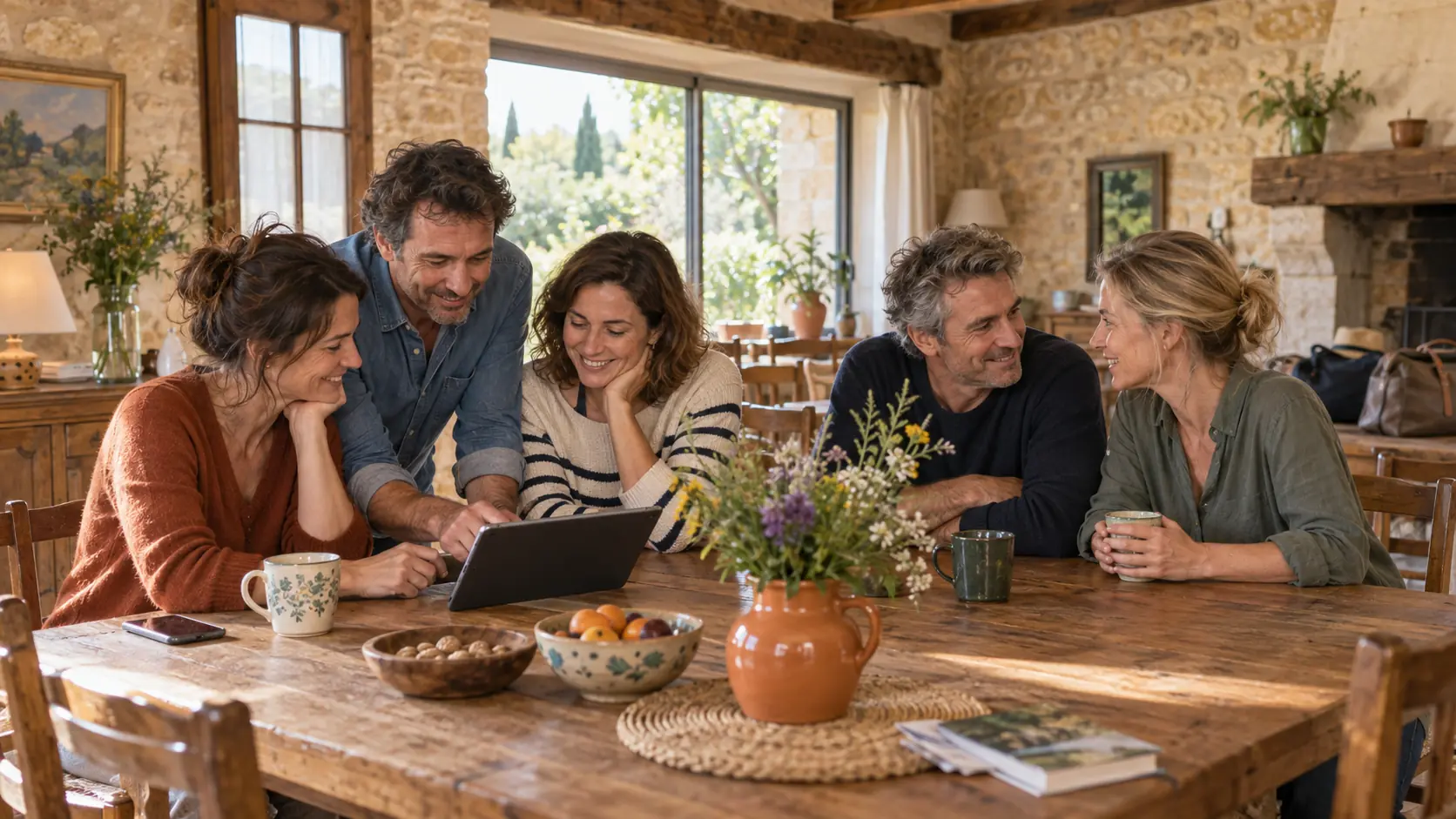
The four couples created a shared Klub, where each one listed their home along with its available periods.
Seeing Before Asking
The change comes down to very little: availability is visible. "We don't ask if it's free anymore, we look. And when it's free, we book."
No Score to Keep
This was the point that worried them most. Did they need to balance out the turns? "We decided not to count. The ones with the house in Arcachon host more than the others, that's logical, it's more in demand. They also travel more often. Over two years, it balances out on its own."
This absence of mandatory reciprocity is what sets a private circle apart from a classic home exchange, where you look for a partner willing to come to your place on the same dates.
What Gets Written Down Once
Each home has its own listing: access, amenities, quirks — the boiler in the Jura, the gate in Arcachon that sticks — and the usage costs. "Before, we'd give the same explanations every time, and something was always missing."
What Changed
Now it happens almost once a month. "We discovered the Jura in November, which we never would have done if we'd had to pay for accommodation on a rainy weekend."
A side effect: they see each other more. "Sometimes we cross paths, sometimes not. But someone's home still creates a connection, even when they're not there."
Who This Speaks To
This applies to groups of friends where several own a home elsewhere — a second home, a mountain apartment, a family house — and who've been inviting each other for years without it ever happening. The blocker is almost never generosity: it's the visibility of the dates.