
Borrowed home: a photo condition check without offending anyone
A few dated photos, a clear conversation and a shared habit are often enough to avoid misunderstandings after a stay at a friend's or relative's home.
What this article covers
- A gesture of trust, not an investigation
- When it is worth doing
- The method in five steps
Yes, a few dated photos taken before and after a stay can prevent plenty of misunderstandings in a borrowed home. The condition is to present them as a shared reference point, not as evidence to wave at someone you trust. Suggest them before arrival, keep to the essentials and keep the images in your private conversation.
This guide describes a voluntary habit between people who know each other. It does not describe the condition report that applies to a rental, which follows different rules you should check separately, and it does not replace advice from your insurer or a legal professional.
A gesture of trust, not an investigation
The risk is not always major damage. More often it is uncertainty: “Was that table already scratched?” or “Did the sofa have that stain before?” Without a shared starting point, everyone relies on memory, and two honest memories can differ.
Photos taken before arrival give you that starting point. They reassure the host, but also the guest, who does not have to worry about being blamed for something that was already there. Presented well, the ritual simply says: “I will look after your home, and I want us both to feel at ease.”
When it is worth doing
- A first loan, when you do not yet have shared habits.
- A stay of several days, or one with several people or children.
- A home with fragile items or things of sentimental value.
- A remote key handover, with no meeting between host and guests at arrival or departure.
For one night at a close friend’s home, swapping two or three photos may be enough, or nothing at all if you decide that together. What matters is choosing a level of formality that suits you both. These are practical guidelines, not official thresholds.
The method in five steps
- Mention it early. In your preparation conversation, write something like: “I’ll take a few photos on arrival and departure. Would you like to do the same? That way we don’t have to wonder who remembers what.”
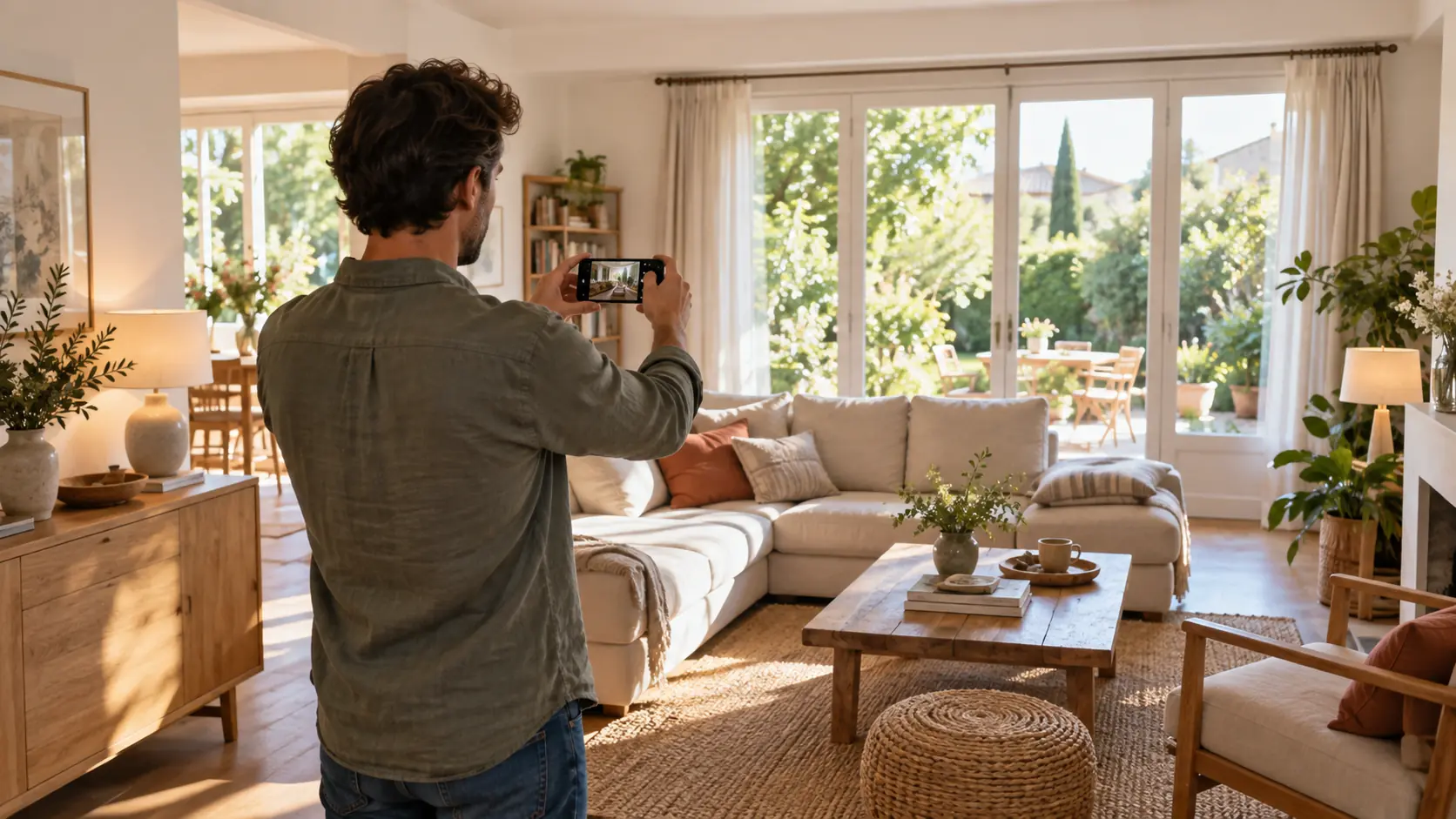
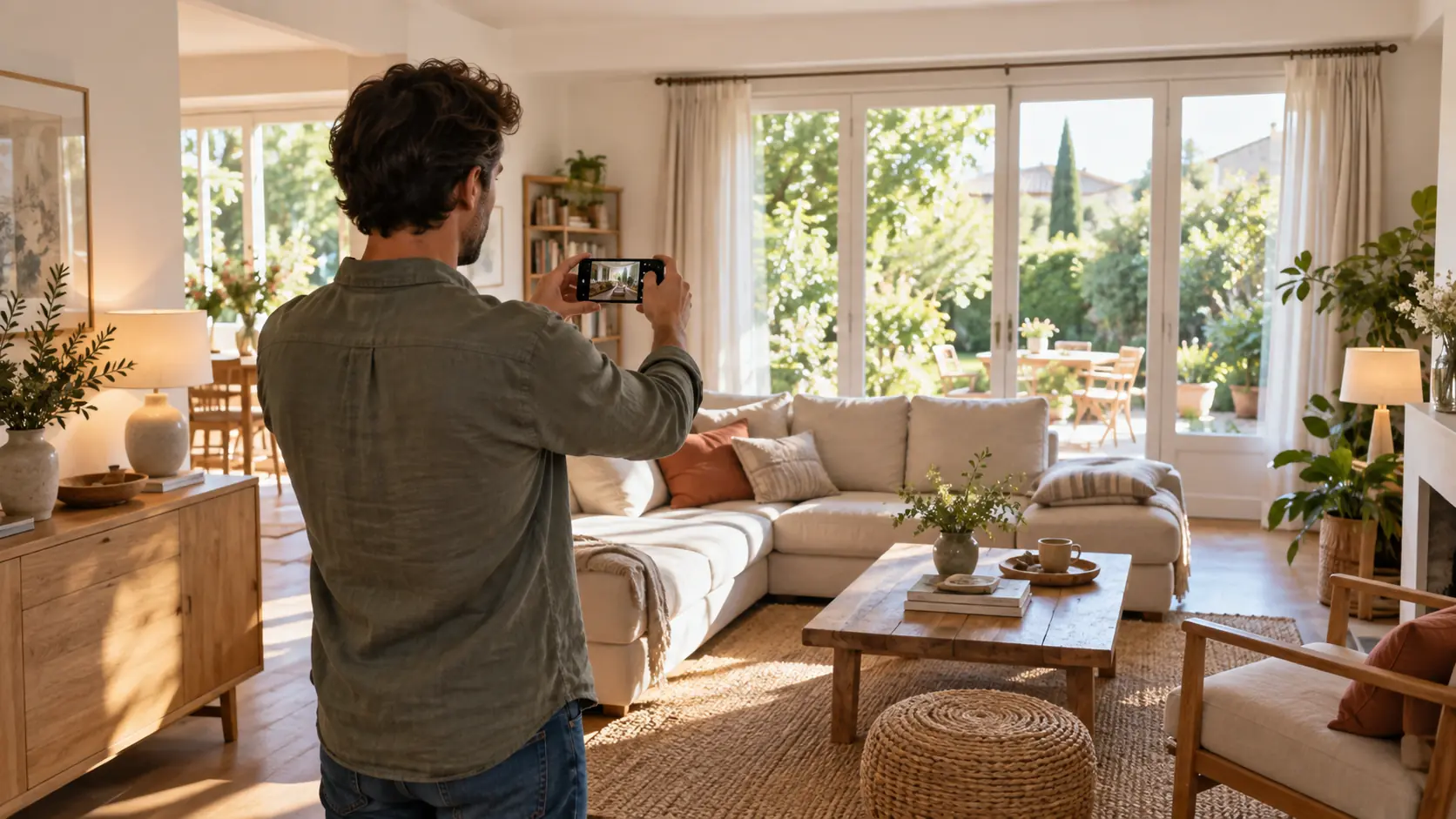
- Choose ten to twelve photos. Go room by room, with an overall view and then the sensitive details (see the table below).
- Keep the date. Keep the original files, or send them in your conversation, so the day and time stay visible.
- Retake the same angles at departure. Standing in the same spot makes the comparison easy.
- Compare together, without playing judge. If everything matches, there is nothing more to do. If something differs, start with a calm conversation.
What to photograph, and why
| Area | What to photograph | Why |
|---|---|---|
| Entrance and living area | Overall view, sofa, table, floors | The most heavily used surfaces |
| Kitchen | Worktop, appliances, visible crockery | Damage is quickly noticed there |
| Bedrooms and bathroom | Bedding, floor, furniture, fixtures | Avoids doubt about the condition on departure |
| Outdoor areas | Terrace, garden furniture, access | Often forgotten, often exposed to the weather |
| Fragile items | Whatever the host points out | Shows what the host really cares about |
What is better not to photograph
A condition check is not an inventory of someone’s private life. Avoid documents, post, screens, very personal belongings and, of course, people. Frame rooms and surfaces, not other people’s possessions.
Keep these images between the two of you as well: they are not meant to be published or shared with others. If you are presenting your own home to your circle, also read how to choose photos of your Kaza without exposing your private life.
If damage turns up afterwards
Stay factual: show the departure photo and the arrival photo, and describe what you see without blaming anyone. Then look for a practical solution together: repair, replacement or simply taking note. Speaking up quickly always helps more than silence.
What an insurance policy covers depends on that policy, the situation and the occupant. Photos do not settle that question. To find your way, reread what a free loan or a rental changes for your insurance and ask your insurer before handing over the keys.
A fictional example: Sarah, Malik and the living room
Imagine Sarah lends her home to Malik and his partner for four nights. A week before, she writes to say she is photographing the house and suggests they do the same on departure. She sends eleven photos, including one of the wooden coffee table she is especially fond of.
Afterwards, Malik notices a mark on that table. The photos show it was not there before. Instead of an argument, they talk: Malik offers to have it sanded, while Sarah prefers to leave it as it is. This example does not guarantee an ideal outcome: it shows how a shared reference point can make a calm conversation easier.
To continue your preparation, add the checklist before your guests arrive, and set general expectations with the ground rules for lending a home to people you know.
Frequently asked questions
Could my friend or relative be offended?
It can happen. Present the approach as something that works for both of you, suggest it early and let the other person decline or adjust it. If they would rather not, you can simply keep your own arrival photos.
Should I tell them before taking photos?
It is simpler and more respectful to mention it in your preparation conversation. The photos are about the home, never about people, and they stay between you.
Does KazaKlub provide a condition-check tool?
The pages describing how KazaKlub works, checked on 16 November 2026, do not mention a dedicated tool. Keep the photos in your usual conversation and agree together on how to find them again.
Arrange sharing within your Klub
KazaKlub helps you organise home sharing within a private circle you choose. Discover how a Klub works: registration is free, the Explorer plan lets you start with one Klub, and a stay request that has been sent is not a confirmation until the host accepts it. The plans do not guarantee availability, acceptance or included stay insurance.
Sign up to KazaKlub and create your first Klub with the people who matter to you. For your first stay, agree on the dates, the hosting conditions and how you will keep a record of the home’s condition.
Your next stay starts with your circle.
Create your account, bring your friends and family together and prepare your first request.
Every stay requires the host’s agreement.