

An Under-Used Second Home: Sharing It Instead of Selling It
Isabelle had her house in the Luberon appraised twice in three years. She didn't sell it. Today the house is used about twenty weeks a year, and the costs are shared.
Isabelle, 58 ans — Paris
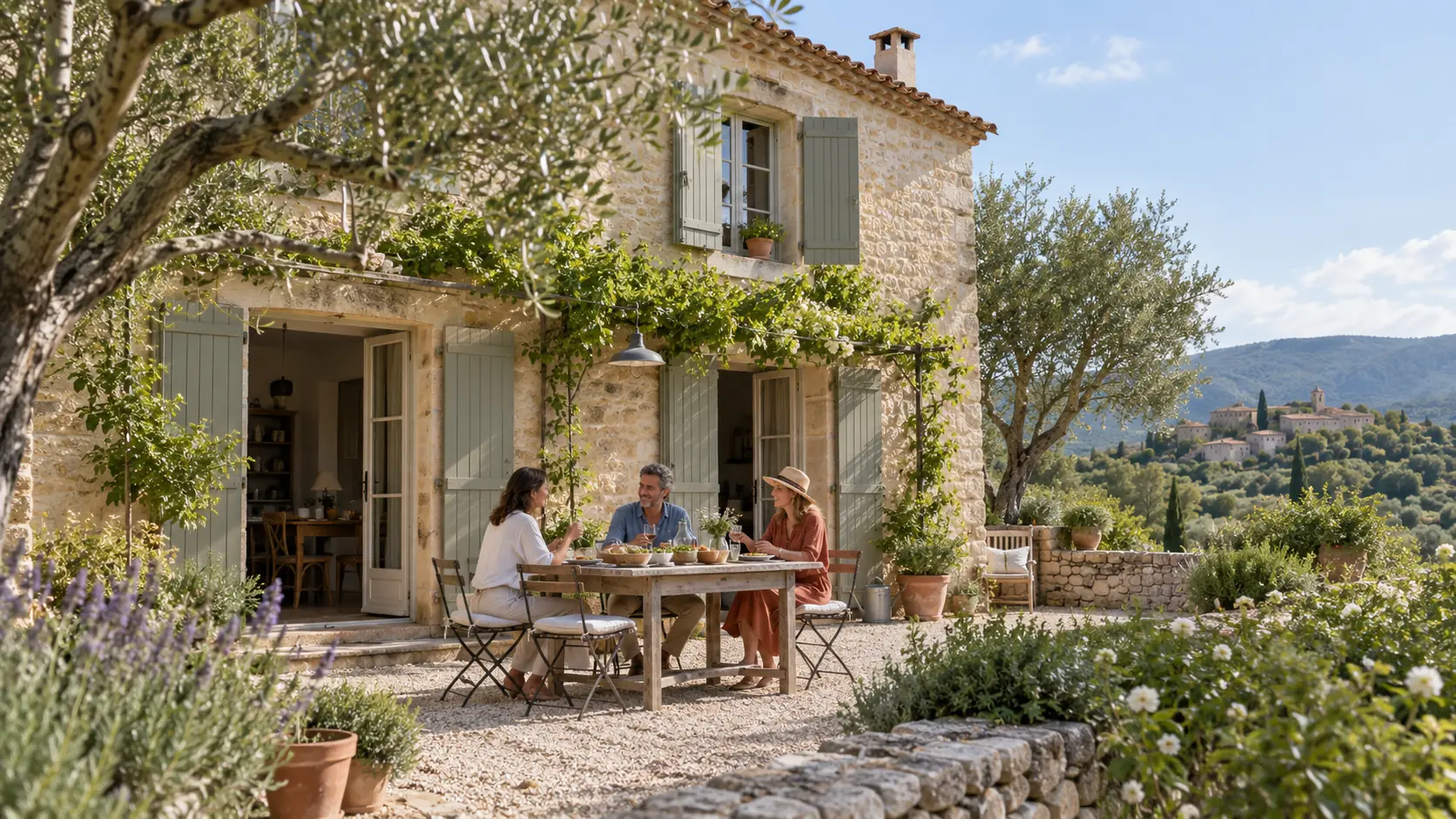
Isabelle inherited a house in the Luberon. For six years, she went there two or three weeks a year. "The rest of the time, I was paying for a closed house."
The Math That Pushes You to Sell
Property tax, insurance, frost-protection heating, garden upkeep, a plumber's visit after one winter. "I added it all up one year. Divided by the nights I actually spent there, each night cost me more than a good hotel."
She had the house appraised twice. "Each time, I backed out. It wasn't a question of money, it was the house where my kids learned to swim."
"I didn't want to sell it. I just wanted it to stop being a burden for nothing."
The Slide She Wanted to Avoid
Vacation rental was suggested to her several times. She refused, for a specific reason: the house holds family belongings, photos, things you don't pack away before every stay.
This is a point many owners describe. Renting means depersonalizing: emptying the cupboards, removing anything of value, turning a family home into a neutral rental. It can be done, but it costs something that isn't counted in euros.
What She Set Up
Isabelle joined, then built, a circle around the house: her two children and their partners, her sister, two nephews, and three couples of close friends — two of whom share a house of their own in return.
- Usage costs are displayed. The cost of a week's electricity, heating, and water is shown on the listing. Everyone contributes without anyone reading the meters.
- Nothing is charged per night. There's no price, no deposit, no rental contract — so no reporting obligations tied to vacation rental.
- Belongings stay in place. "My photos are still on the mantelpiece. No one has moved them."
What Changed
The house is now used about twenty weeks a year. Running costs no longer fall on her alone. And upkeep has sorted itself out without anyone organizing it: "My nephew trimmed the hedge because he was there in June. I hadn't asked him to."
She hasn't made spectacular savings. What changed is elsewhere: the house stopped being a problem to solve.
Who This Speaks To
This applies to second-home owners torn between selling and bearing the costs of an under-used property, and to those who've been advised to rent when that doesn't match what they actually want. The useful question isn't "how much does it bring in" but "who is this house being kept up for."